
The Science Behind Facial Massage: A Mechanotherapy Approach to Skin and Muscle Health
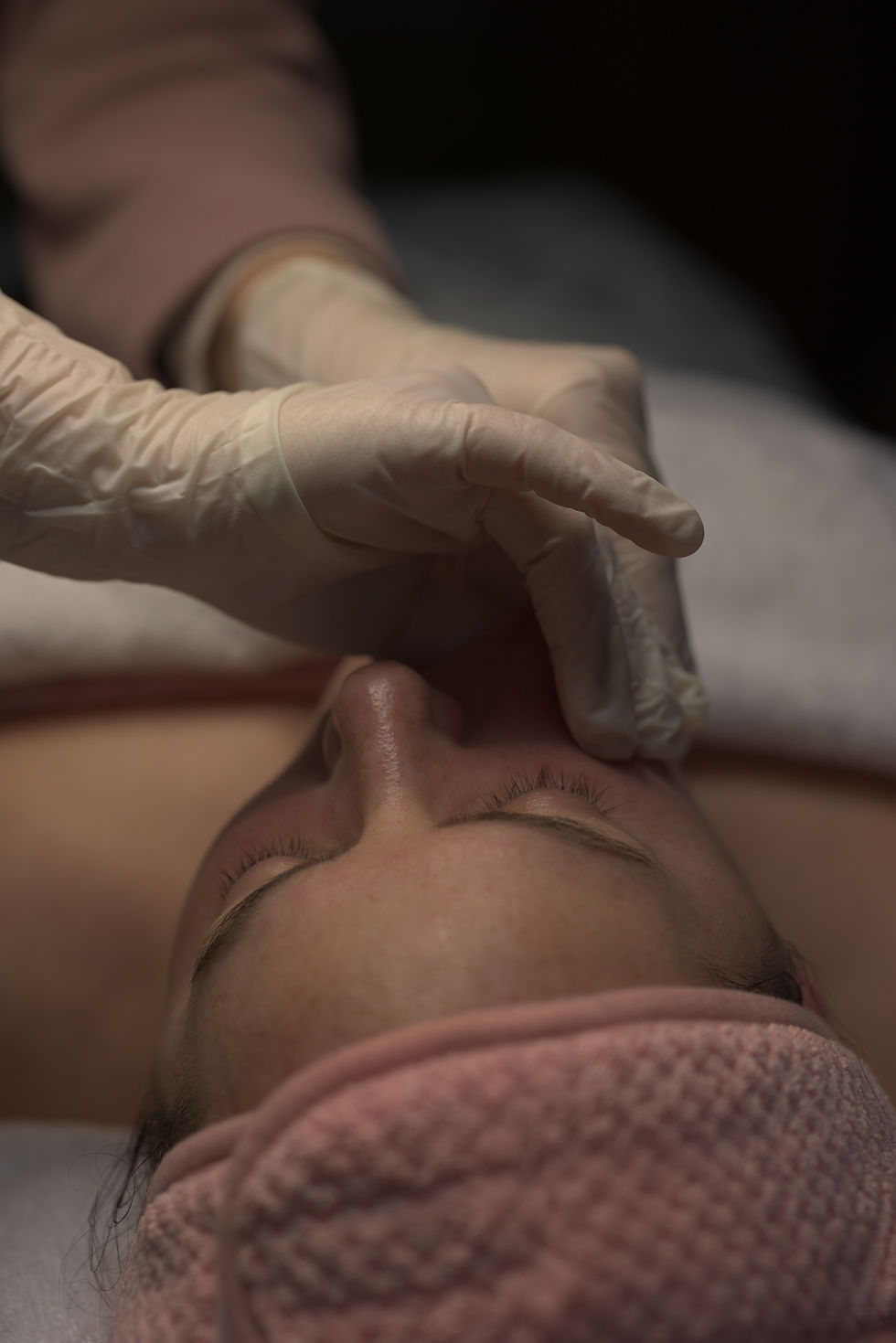
Facial massage is a mechanotherapeutic technique that involves specific manual manipulations of the soft tissues to enhance their overall condition. Each type of massage movement carries a physiological purpose, affecting facial tissues in distinct ways.
Scientific Benefits of Facial Massage
Recent research highlights the key effects of facial massage, including:
Improved blood circulation and lymphatic drainage, which helps detoxify tissues and reduce puffiness [[1,2]].
Increased skin firmness and elasticity by stimulating collagen and elastin production [[3]].
Toning of hypotonic facial muscles and relaxation of overactive, tense muscles [[2]].
Vertical lifting of soft tissues and facial contour sculpting [[4,5]].
Although facial massage is widely used in the cosmetic industry for its aesthetic benefits, its effects extend beyond skin appearance. Scientific studies suggest that facial massage initiates a series of physiological and biochemical responses, making it a powerful tool for maintaining skin and muscle health at a deep level.
Physiological and Biochemical Mechanisms Behind Facial Massage
Mechanotransduction: Turning Mechanical Stimuli Into Biochemical Reactions
Mechanotransduction is the process by which mechanical forces are converted into biochemical signals. Gentle stretching and pressure applied during massage lead to the reorientation of dermal fibroblasts, triggering their synthetic activity. Studies confirm that controlled mechanical stretching promotes the production of collagen and elastin, which are crucial for skin firmness and elasticity [[3,6]].
Muscle Protein Synthesis and Structural Support
Massage enhances protein metabolism and stimulates the synthesis of myofibrillar proteins, which are vital for maintaining facial muscle tone. This process is particularly crucial in aging, as muscle atrophy contributes to facial volume loss and sagging skin [[7]]. Additionally, massage activates satellite cells—specialized muscle stem cells responsible for tissue repair and regeneration. This helps counteract muscle deterioration, preserving facial structure over time [[8]].
Enzymatic Activation and Tissue Remodeling
Facial massage has been shown to stimulate enzymatic systems involved in tissue renewal. For example, it increases levels of matrix metalloproteinase-9 (MMP-9), an enzyme essential for extracellular matrix remodeling. MMP-9 plays a key role in breaking down aged collagen fibers and promoting new collagen synthesis, which is critical for skin rejuvenation and repair [[9]].
Lymphatic Drainage and Detoxification
Massage stimulates lymphatic flow, accelerating the removal of metabolic waste and reducing inflammation in facial tissues. Poor lymphatic drainage often results in puffiness and skin dullness, making massage an effective method for detoxification and revitalization [[2]].
Neurophysiological Benefits: Relaxation and Stress Reduction
Facial massage has a direct effect on the nervous system, promoting relaxation by stimulating the parasympathetic response. This reduces cortisol levels, decreases facial tension, and improves overall skin function. Research has shown that massage can influence neurotransmitters like serotonin and dopamine, further enhancing its calming and mood-boosting effects [[10]].
Fascia Release and Deep Structural Work
The fascia is a connective tissue network that supports skin and muscles. Facial massage techniques targeting the fascia can release adhesions and improve tissue mobility. Studies suggest that fascial manipulation enhances blood flow and oxygenation, optimizing skin nourishment and repair [[11]].
Massage as a Complementary Therapy for Skin Disorders
Emerging research suggests that mechanotherapy, including massage, may have therapeutic potential for various skin conditions such as acne, rosacea, and dermatitis. By modulating inflammatory responses and improving microcirculation, massage can support skin healing and reduce symptoms of chronic skin disorders [[12]].
Conclusion: A Holistic Approach to Facial Health
Given the extensive physiological benefits of facial massage, it is more than just an aesthetic treatment. As a form of mechanotherapy, it influences deep tissue structures, promoting skin renewal, muscle health, and overall facial balance. Whether used for anti-aging, relaxation, or therapeutic purposes, facial massage is a scientifically backed method for enhancing both appearance and function.
References
Geoffrey C. Massage - the scientific basis of an ancient art: part 1. Br J Sp Med 1994; 28(3).
Geoffrey C. Massage - the scientific basis of an ancient art: part 2. Br J Sp Med 1994; 28(3).
Yang C. Proliferation and collagen production of human patellar tendon fibroblasts in response to cyclic uniaxial stretching in serum-free conditions. J Biomech 2004 Oct;37(10):1543-50.
Nishimura H. Analysis of morphological changes after facial massage by a novel approach using three-dimensional computed tomography. Skin Research and Technology 2016; 0: 1–7.
Okuda I. Objective analysis of the effectiveness of facial massage using breakthrough computed tomographic technology: A preliminary pilot study. Skin Res Technol. 2022;28:472–479.
Peters A. Cyclic mechanical strain induces TGFβ1-signaling in dermal fibroblasts embedded in a 3D collagen lattice. Arch Dermatol Res. 2015 Mar;307(2):191-7.
Lawrence M. Massage as a mechanotherapy promotes skeletal muscle protein and ribosomal turnover but does not mitigate muscle atrophy during disuse in adult rats. Acta Physiol. 2020;e13460.
Hunt E. Massage increases satellite cell number independent of the age-associated alterations in sarcolemma permeability. Physiol Rep. 2019;7(17):e14200.
Humbert P. Mécano-Stimulation™ of the skin improves sagging score and induces beneficial functional modification of the fibroblasts: clinical, biological, and histological evaluations. Clinical Interventions in Aging 2015:10 387–403.
Field T. Massage therapy research review. Complement Ther Clin Pract. 2014;20(4):224-9.
Schleip R. Fascial plasticity – a new neurobiological explanation. J Bodyw Mov Ther. 2003;7(2):104-116.
Lymbery J, Glover R. Mechanotransduction and skin disease: could massage be an effective treatment? Dermatol Ther. 2021;34(2):e14790.


Comments